

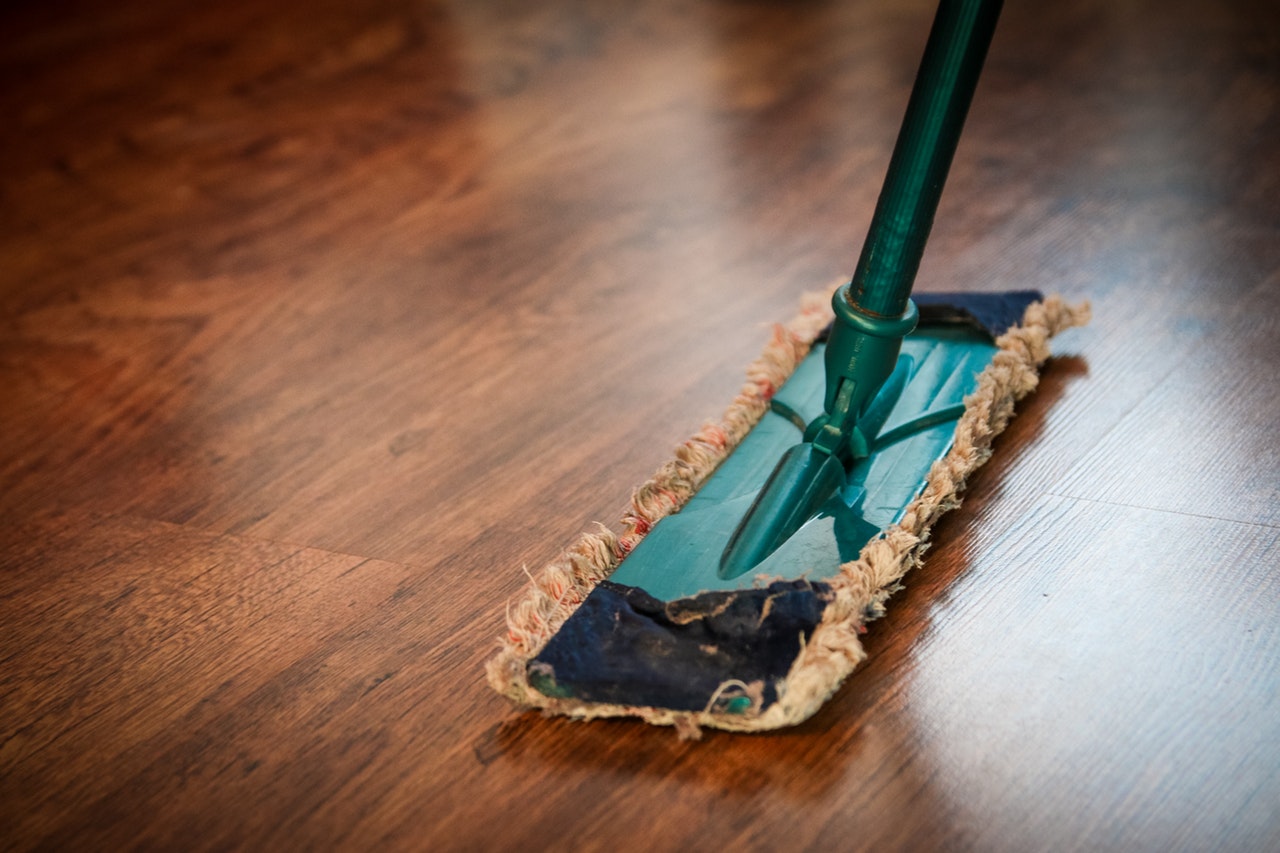
Cleaning a hardwood floor safely is mostly about restraint: keep it dry most of the time, reach for a damp mop only now and then with a cleaner made for the floor's finish, and keep a few everyday products off it entirely. Vinegar, steam mops, oil soaps, paste wax, and standing water do more harm to a finish than ordinary dirt ever will. The right routine depends on how your floor was finished, and in Everett it also depends on the season, because a wet winter and a long heating season each work on a wood floor in their own way.
What's the safest way to clean a hardwood floor day to day?
Day to day, dry cleaning does almost all the work. Sweep, dust-mop, or run a vacuum on its bare-floor setting, which keeps the spinning beater bar from scuffing the finish. The wood flooring industry's trade group, the NWFA, builds its whole maintenance routine on that dry-first habit for one reason: grit. Fine sand tracked in from outside behaves like sandpaper underfoot, and grinding it across the finish day after day is what wears the sheen off the walking paths first.
Wet cleaning is the occasional job, and a little goes a long way. When dusting no longer cuts it, use a cleaner made for your floor's finish and a barely damp mop, wrung out until the floor is wet for only a moment. Wet mops and steam mops are the two the NWFA tells people to skip, and for good reason: both push water where a wood floor can't defend itself. Wood is porous, and standing water works down into the joints between boards, past the reach of the finish. Seams fail first.
Why does the finish decide how you clean?
How your floor was finished decides what cleaning it safely looks like, because wood floors wear one of two very different finishes. A surface finish, usually a water-based or oil-based polyurethane, forms a thin clear film on top of the wood, so from day to day you're cleaning the coating rather than the wood itself. A penetrating finish, like a hardwax oil, soaks in instead of building a film and leaves the grain closer to the surface. Almost anything bought in the last couple of decades, and nearly every factory-finished floor, sits in that first group.
The finish also settles what you keep off the floor. Factory finishes and waxes or oils don't mix: once wax is on, the next maintenance coat has nothing to grip, so a floor that could have been freshened with a quick recoat ends up needing a full sanding instead. Oiled floors work the other way, kept up by re-oiling with a matched product rather than a polyurethane cleaner. If you don't know which finish you have, sort that out before buying anything, since a showroom can usually place it from an offcut or a photo of a worn edge.
What ruins a hardwood finish?
Most finish damage comes from products people trust for other jobs. Vinegar is the classic mistake: it's acidic, and on a clear finish that acid dulls and slowly etches the coating a little more with every wash. Bleach and ammonia are harsher still and can strip a finish outright. Oil soaps and paste wax leave a film that clouds a surface finish and blocks the next maintenance coat. Steam is the sneaky one, since a steam mop looks gentle while it drives hot moisture straight through the finish and into the seams. Wood-flooring pros put all of these on the same do-not list. Here's the short version, with what to use instead.
Common mistake | Why it harms the finish | Use instead |
|---|---|---|
Vinegar or lemon juice | Acidic; dulls and etches a clear finish over time | A cleaner made for your floor's finish |
Steam mop | Drives hot moisture into the joints and the wood | A barely damp microfiber mop |
Bleach or ammonia | Strips the finish | A cleaner made for hardwood floors |
Oil soap or wax on a factory finish | Leaves residue and blocks future recoats | Keep the finish bare |
Wet mop or standing water | Seeps into board seams and swells the wood | Wipe spills dry; damp-mop sparingly |
How Everett's weather changes a hardwood routine
Everett's climate leans on a wood floor in two ways, and both change the routine. The first is water and grit from outside. The area sees about 36 inches of rain a year, most of it from fall through early spring, with November and December the wettest months at roughly 6.1 and 5.2 inches, so shoes arrive wet and loaded with fine grit through much of the cold season. That grit does most of the wearing, and most of it can be stopped at the door. The cleaning trade's rough figure, from the industry group ISSA, is that around 80 percent of what dirties a building walks in on people's shoes; offices run 12 to 15 feet of entrance matting to trap 80 to 90 percent of it before it reaches the floor. You don't need a runner that long at home. A coarse mat outside and an absorbent one just inside each busy door will grab most of what would otherwise reach the floor.
The second pressure is dry winter air. Run a furnace for months and indoor humidity falls, the wood gives up moisture and shrinks, and thin gaps open along the boards until the floor looks parched. Wood is always trading moisture with the air around it, so the real protection is a steady indoor climate rather than anything you do with a mop. The range wood-flooring pros aim for is 30 to 50 percent relative humidity at 60 to 80 degrees, kept fairly level year-round. A cheap hygrometer and a humidifier through the heating season do more for the floor than any cleaner. Gaps that open in a dry January usually close again once spring brings the humidity back.
When cleaning is not enough: recoat, refinish, or replace
Cleaning keeps a finish healthy, but it can't rescue one that's already worn through, and telling those apart saves money. A surface-finished floor with dull, scuffed walking lanes but no bare wood showing is usually a candidate for a screen-and-recoat, where a flooring pro scuffs the old finish and rolls on a fresh coat with no sanding involved. Let the wear reach bare wood and the job grows into a full sand-and-refinish. Engineered floors come with a limit worth checking first: the real-wood layer on top is thin, anywhere from about 0.6 mm to 4 mm, and a floor at the low end near 1 mm can be recoated but never sanded back to fresh wood.
When a floor is genuinely spent, from deep water damage or from boards sanded as far as they will go, replacing it is the honest answer, and the cost of one more refinish is worth weighing against a new floor that starts the clock over. We walk through that trade-off in a separate piece on how to weigh refinishing against replacing a hardwood floor. If the math points to something new, it pays to see finishes in person first, since the finish is the part you will live with and clean; you can browse the hardwood we carry and pick one to match how much upkeep you actually want.
Questions we get about cleaning hardwood floors
Can I use vinegar and water on hardwood floors?
Better not to. Vinegar is acidic, and even diluted in a bucket of mop water it dulls a clear finish a little more each time it goes down. A cleaner made for your floor's finish lifts the same dirt without working against the coating.
Are steam mops safe for hardwood?
No, and it's one of the quicker ways to wreck a floor. A steam mop forces hot vapor through the finish and down into the seams between boards, which is exactly where a wood floor is weakest. Stick to a barely damp mop.
How often should I damp-mop a wood floor?
Damp-mop only when dry cleaning stops keeping up, which for most homes means every week or two in the busy rooms and less often elsewhere. The daily job stays dry: sweeping, dust-mopping, or vacuuming on the bare-floor setting. When you do damp-mop, wring the mop hard and use a finish-safe cleaner so the floor dries almost as fast as you move.
What humidity should I keep my house at for wood floors?
Aim for 30 to 50 percent relative humidity and a temperature around 60 to 80 degrees, kept fairly steady through the year. Wood swells and shrinks as the air changes, so a stable indoor climate is what keeps boards from cupping in a damp spell or gapping in a dry one.
Can you sand and refinish engineered wood floors?
Sometimes, depending on the wear layer. Engineered wood is a real-wood top layer over plywood, and only the thicker layers hold enough wood to sand; a thin one around 1 mm can be recoated but not sanded back to fresh wood. If you're not sure what yours has, bring a photo or an offcut to the showroom and we can usually place it.
Keeping your hardwood looking right in Everett
None of this takes special gear or a cabinet full of bottles, just a light and steady hand: less water, more dry cleaning, a cleaner built for the finish, and an eye on indoor humidity through Everett's wet winters and dry heating seasons. Do that and a good finish will run for years before it needs a professional's touch. When that day comes, or when you would rather start fresh with a new floor and a finish chosen for the way you live, our team installs hardwood across Snohomish County and is glad to talk it through. When you're ready, request a free in-home estimate and we'll measure the rooms, walk through finishes, and price it out with no pressure.


