

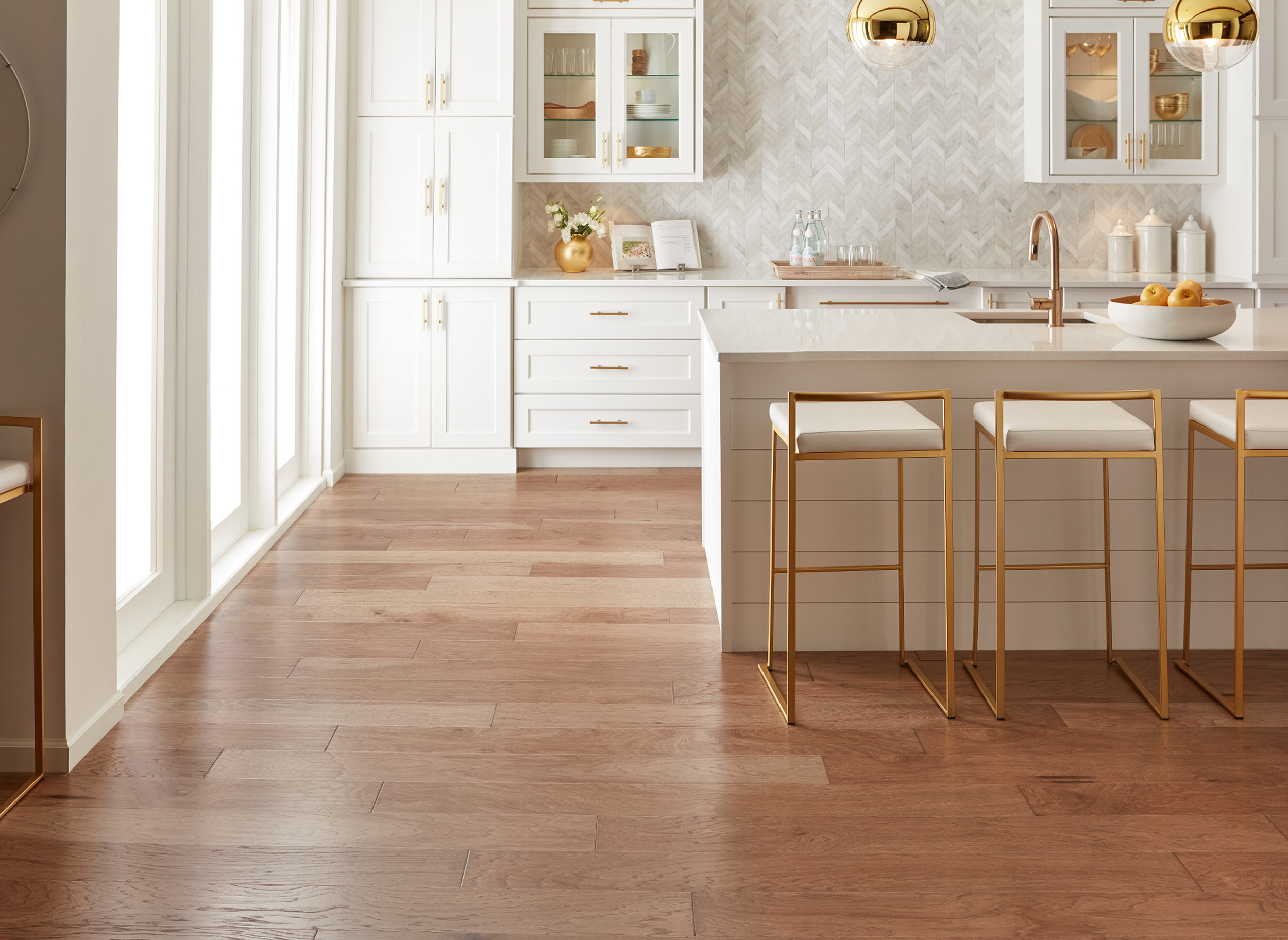
When the sky has been the same shade of gray for what feels like weeks, your floors do a lot of heavy lifting. The right hardwood color can bounce what little natural light you get around the room, make spaces feel bigger, and keep things from looking dreary, even in the middle of a rainy Everett winter. The trick is choosing tones that work with our Pacific Northwest light, not against it.
Why light hardwood works so well in our climate
Our overcast skies act like a giant softbox. That diffused light is beautiful, but it’s also weak, so dark floors can swallow it up. Pale woods reflect more of that daylight back into the room, which is why they’re such a smart choice for living rooms and kitchens that already feel a bit dim.
In a moisture-heavy climate, you’ll usually want to lean toward engineered hardwood rather than solid, especially on the main level or over concrete. The layered construction helps reduce seasonal movement as humidity swings between wet winters and drier summers. If you’re curious how many light-toned styles are available in this construction, you can explore a range of engineered hardwood designs that are built for Northwest conditions.
Best light color families for brightening a room
Within “light wood,” there are a few very different looks. Thinking about undertone is key so your floors feel warm and inviting, not cold or washed out.
- Soft natural oak: Classic pale oak with minimal stain is one of the easiest ways to lift a room without locking you into a trendy color. It plays nicely with both cool gray walls and warmer greiges, which many homes in Marysville and nearby neighborhoods already have. If you like this timeless look, you’ll find plenty of light oak hardwood options in different widths and finishes.
- Scandinavian blondes: Very pale, almost whitewashed planks create that airy, Nordic feel. These work especially well in smaller spaces because they visually expand the floor plane. Just keep in mind that ultra-light tones can show dirt more, so they pair best with families who are okay with a quick sweep after muddy-boot days.
- Soft greige woods: If your walls or furniture lean gray, greige floors (a mix of gray and beige) can tie everything together. They’re light enough to brighten a space but have just enough warmth to keep things from feeling chilly when the rain sets in.
For entryways, mudrooms, and kitchens where puddles and drips are a fact of life, many homeowners choose to echo these pale tones with luxury vinyl in a coordinating color, saving real hardwood for drier spaces. It’s easy to coordinate by browsing wood-look luxury vinyl planks that mimic light oak and maple.
Texture, sheen, and plank size: details that change the mood
Color is only part of how bright a floor feels. Texture, sheen, and plank width all affect the way light hits your space.
A smooth surface with a low-satin or matte sheen will still reflect light, but it won’t create glare or show every footprint. That balance is ideal in a region where you’re constantly transitioning from wet sidewalks to dry interiors. If you prefer a more rustic style, hand-scraped and subtly distressed planks hide everyday wear while still keeping things light and open. You can compare how different smooth and hand-scraped textures change the character of pale wood tones.
Wider planks (think 6–9 inches) reduce the number of seams across the floor, which helps rooms feel calmer and more expansive. That can be especially helpful in older Everett bungalows with smaller, separate rooms, where every trick to visually open things up matters. For a deeper dive into how species, width, and finish interact, our team has put together a practical hardwood flooring overview that walks through the main decisions.
Balancing brightness with real-life durability
Light-color hardwood has to stand up to real life: kids, pets, hiking boots, and the occasional forgotten umbrella. In our damp climate, that means paying attention to both finish durability and moisture management.
A high-quality factory finish will help pale planks resist scratching and staining, but it’s equally important to install over properly tested subfloors and to allow for acclimation before boards go down. The installation professionals we work with are used to Northwest crawlspaces and concrete slabs, and you can get a sense of what goes into a smooth project by reviewing the flooring installation guidance our showroom provides.
In splash-prone zones where you still want a bright, wood-look floor, consider pairing your hardwood in the main living areas with waterproof alternatives in bathrooms or laundry spaces. Coordinating tones across categories is easier when you can see them side by side, and our educational hub on waterproof flooring choices explains how these materials behave next to traditional wood.
If you’re ready to see how different light hardwood colors actually look under Pacific Northwest daylight, the best next step is to visit our showroom and bring a few samples home. You can start the process by requesting a free in-home flooring estimate, and we’ll help you narrow in on the tones that make your home feel bright, welcoming, and truly yours—no matter what the weather is doing outside.


