

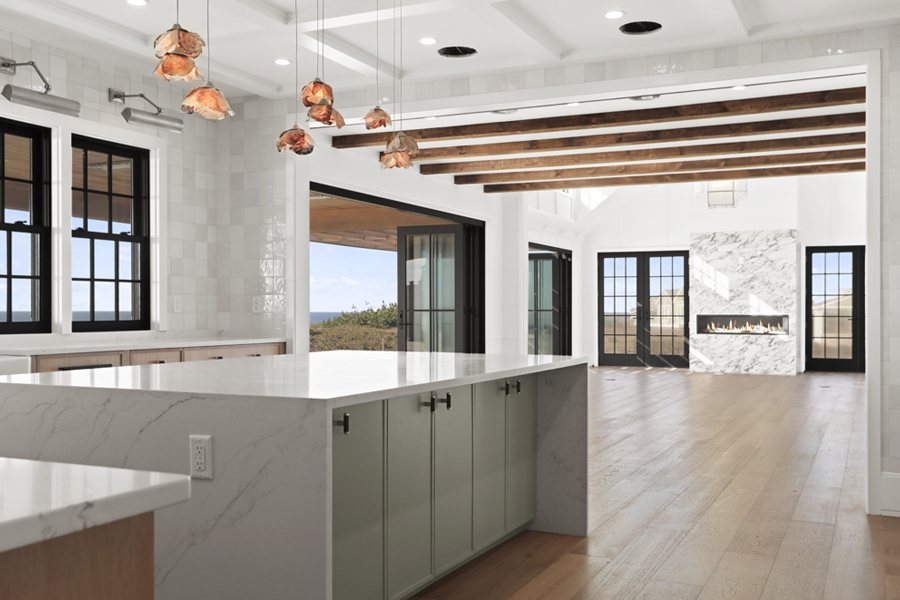
If you live near the Sound, you know the drill: wet shoes by the door from October to April, dogs coming in from muddy walks, and a heater that never quite dries the air out. That same moisture cycle that fogs your windows can be tough on traditional wood floors. Engineered hardwood steps in as a way to get the warmth and beauty of real wood without constantly worrying about warping or gaps.
What makes engineered hardwood different?
Engineered hardwood is still real wood, but it’s built differently from old-school solid planks. Instead of a single thick board, it has a hardwood veneer on top of multiple layers of plywood or high-density fiberboard stacked in alternating directions.
That cross-layer construction is what makes engineered hardwood options much more stable when humidity jumps up and down through the seasons. The layers work against each other, so the plank is less likely to cup, crown, or develop big gaps as your home swings from damp winter to drier summer.
You’ll see the same familiar choices you’d expect with solid wood—oak, hickory, maple, different widths, and a range of finishes—just in a construction that’s better suited to the Pacific Northwest’s moisture-heavy climate.
Why engineered hardwood suits a damp Pacific Northwest home
In a coastal city, floors are constantly dealing with background humidity, wet entryways, and the occasional spill that doesn’t get wiped up right away. Engineered planks handle that environment better than solid wood in most main living areas.
- The layered core resists expansion when indoor air is humid for weeks on end.
- Thinner wear layers respond more gently to seasonal shifts, helping reduce gapping.
- Many modern finishes create a tougher barrier against everyday splashes.
If you love the look of wide boards, this construction really shines. Wider pieces of solid wood can move a lot as they take on and release moisture, which is why stability matters so much when you’re choosing wide-plank hardwood styles for an open-concept living or dining room.
For truly wet zones—like laundry rooms, mudrooms, or directly in front of exterior doors—it’s still smart to think beyond wood. Waterproof luxury vinyl and rigid core products tolerate standing water and constant drips far better than any hardwood. When you’re planning those high-splash areas, it can help to compare engineered wood with waterproof luxury vinyl choices so each room gets the right level of protection.
Species, finishes, and textures that work well here
Once you’ve decided on engineered construction, the next step is choosing how the floor will look and wear over time. Species and finish both affect how forgiving your floor will be in a busy, moisture-rich household.
Oak is a popular choice because its grain helps disguise small dings and day-to-day wear. If you’re drawn to that classic pattern, it’s worth exploring engineered oak designs that balance character with long-term durability.
Texture also matters. Smooth, glossy planks show every scratch and speck of dirt. Lightly hand-scraped or wire-brushed surfaces, on the other hand, soften the appearance of scuffs from kids, pets, and grit tracked in after rainy hikes. If you like a lived-in look that ages gracefully, you may gravitate toward hand-scraped wood textures that are designed to hide the inevitable marks of real life.
For households where moisture is extreme—think big dogs, lakeside living, or constant puddles near patio doors—it can be helpful to mix materials. Many families pair engineered hardwood in main spaces with waterproof laminate flooring in the heaviest-use entries to keep the overall look cohesive while dialing up performance where it’s needed most.
Installation and care basics in a humid climate
Even the most stable engineered plank still needs the right prep and care. How your floor is installed and maintained will decide how it handles our long wet season.
Proper acclimation—letting the planks sit in your home before installation—helps them adjust to indoor conditions so they move less once they’re locked in place. Moisture testing of concrete or wood subfloors is just as important; if the base is damp, problems will show up later no matter what product you choose. The installation professionals we work with are used to these Pacific Northwest realities, and the installation guidance they follow is built around managing moisture from day one.
Day to day, a few habits go a long way:
- Use mats at exterior doors to catch grit and water.
- Wipe up spills promptly, especially around pet bowls and plants.
- Run a dehumidifier if your indoor air feels sticky for weeks at a time.
If you’d like to dive deeper into how engineered compares to solid wood, finishes, and long-term care, our broader hardwood flooring education library is a helpful next step.
When you’re ready to see how these options look in person, it can be much easier to choose colors and textures in real light. You can start planning with a free in-home flooring estimate and talk through which engineered hardwood styles make the most sense for your rooms and your climate.


