

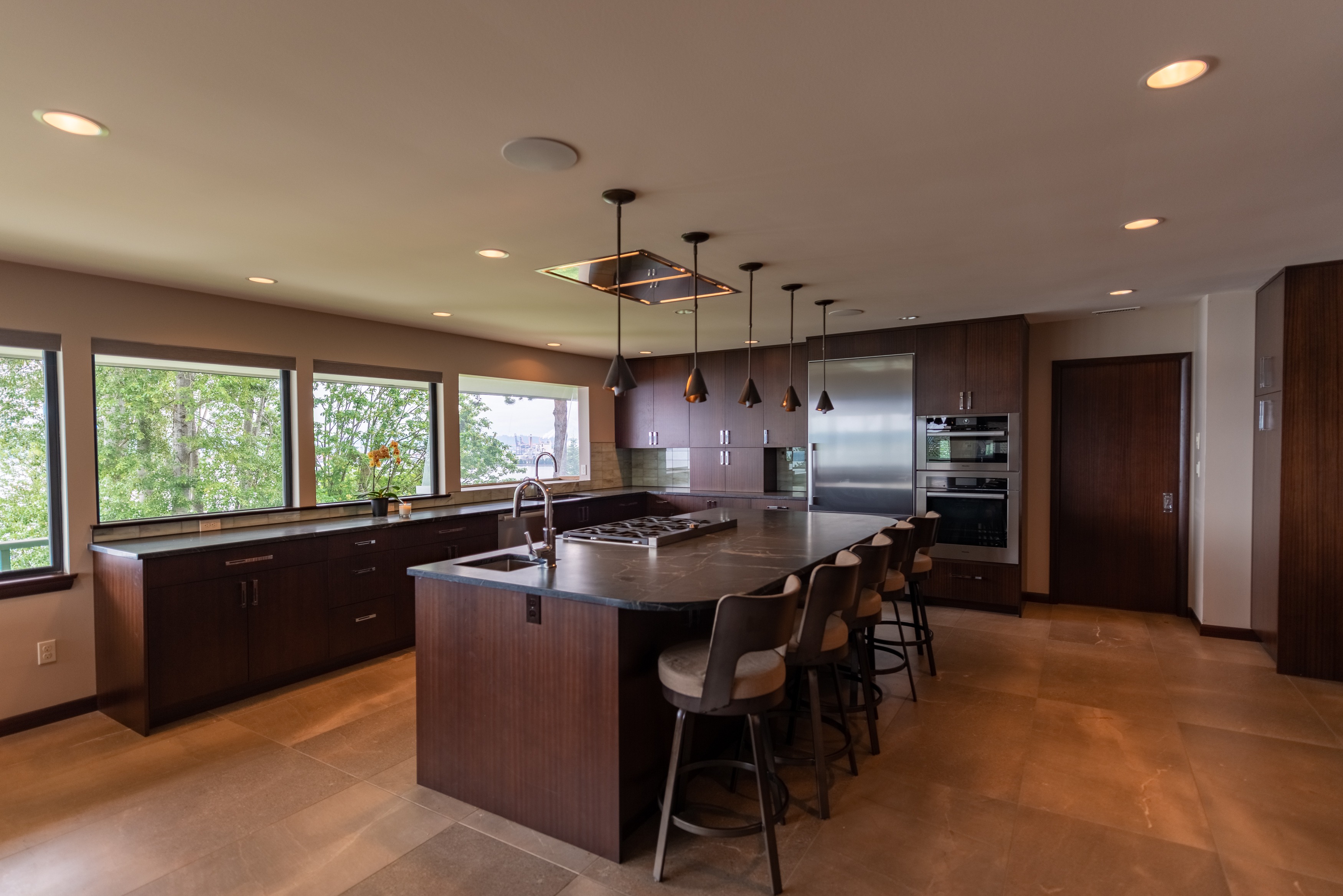
Mid-century homes have a confidence to them. The low rooflines, broad windows, and clean interior sightlines don’t need fussy finishes to feel warm; they need flooring that respects the architecture. In Lynnwood, that usually means choosing wood tones and plank styles that let the home’s original character breathe rather than covering it up with something overly glossy, overly gray, or too busy for the space.
Start with the quiet simplicity mid-century design was built on
Most mid-century interiors look best when the floor acts as a backdrop for the architecture. Think softer grain movement, natural-looking color variation, and finishes that don’t bounce too much light back into the room. In many cases, that points homeowners toward smooth hardwood surfaces instead of heavily distressed textures. The goal is restraint: a floor that supports walnut casegoods, slim black accents, and open-plan living without competing for attention.
Plank width matters too. Many older homes feel better balanced when the boards have a little presence, especially in long living rooms with strong horizontal lines. If you want that updated-but-still-appropriate look, wide-plank wood styles can bring visual calm to the room while still feeling rooted in the period.
Species and tone make the biggest difference
When people picture classic mid-century flooring, they often imagine warm browns and understated grain. That’s why oak and walnut-inspired looks continue to work so well. Oak gives you flexibility; it can lean clean and contemporary or slightly more traditional depending on stain color and finish. Walnut delivers deeper contrast and a richer, more tailored feel. If you want to compare grain character and color direction, browsing oak hardwood selections is a helpful place to start.
The bigger design point is to avoid extremes. In homes around Everett and nearby neighborhoods, we often see remodels go off track when the floor is either too orange or too washed out. Mid-century design usually lands best in the middle: warm, grounded, and natural. A satin sheen often feels more authentic than a high-gloss finish, and it also does a better job of hiding everyday dust from Pacific Northwest living.
Construction matters in our climate just as much as style
That visual direction is only half the decision. Around Puget Sound, moisture and seasonal humidity shifts are part of daily life, especially in homes that see wet shoes, rain jackets, and dogs coming in from the yard for much of the year. For that reason, many homeowners are better served by engineered hardwood constructions, which tend to handle expansion and contraction more gracefully than solid planks in changing conditions.
That doesn’t mean solid wood never works, but it does mean the subfloor, room placement, and acclimation process deserve real attention. The installation professionals we work with have long-standing experience with these variables, and you can get a clearer sense of that process on our floor installation overview. In a mid-century remodel, that planning matters because transitions, sightlines, and flush visual flow are often more noticeable than in newer homes.
See the color in person before you commit
Photos flatten everything. A floor that looks perfectly balanced on a screen can read pink, yellow, or too dark once it’s sitting next to your cabinetry and furniture. That’s one reason a showroom visit is so valuable. Seeing full-sized samples, comparing undertones side by side, and talking through the rest of the house helps narrow the field much faster than guessing online. If you want to do some homework first, our hardwood education library is a useful resource for understanding finishes, construction, and maintenance expectations.
The best mid-century flooring choices feel effortless when they’re done right. They support the architecture, hold up to real weather, and make the whole home feel more intentional. If you’re ready to sort through species, widths, and finishes for your space, you can start with a free in-home estimate.


