

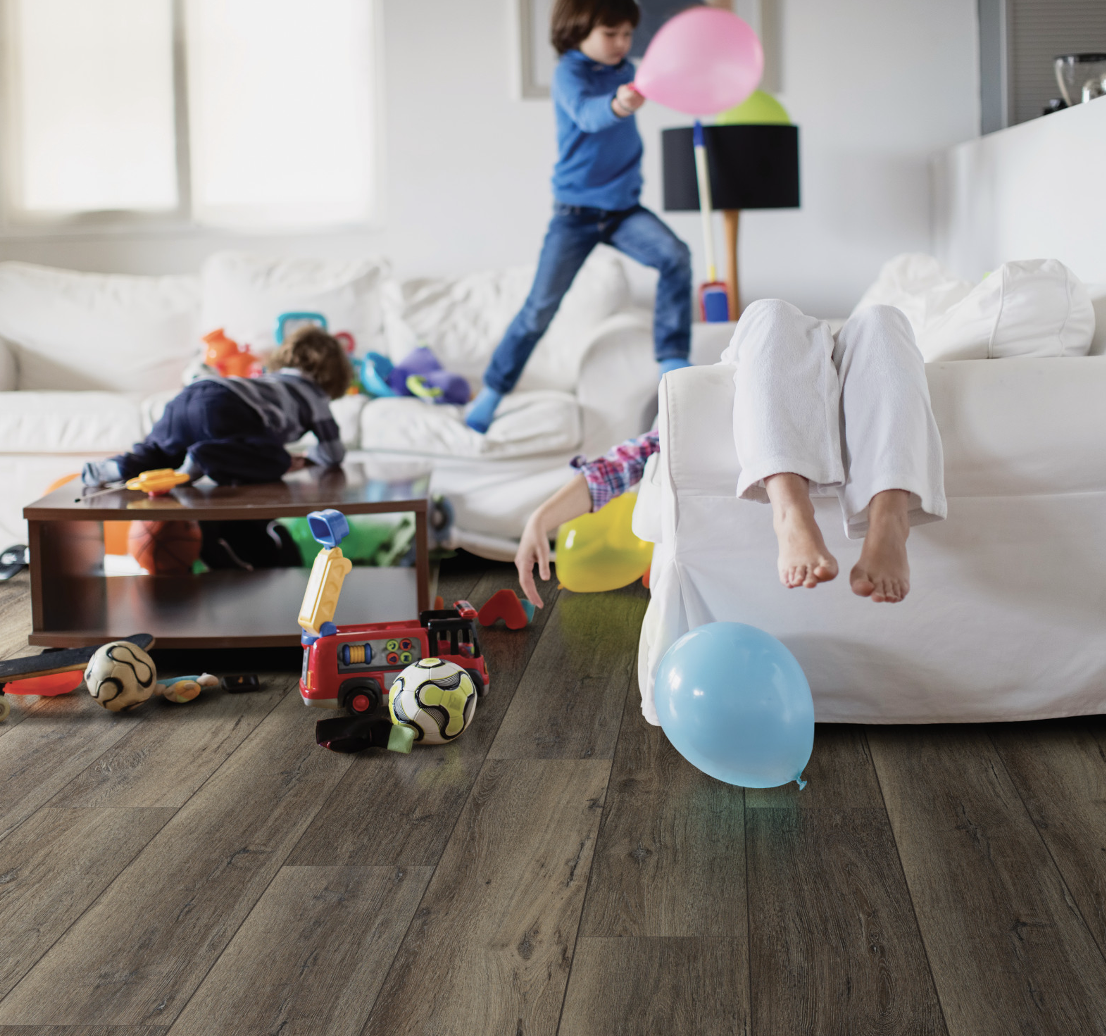
If you’ve ever walked across an upstairs bedroom late at night and heard every footstep echo through the ceiling below, you already know that floor choice affects more than looks. In homes around Everett, that matters even more because damp weather often pushes homeowners toward hard-surface flooring instead of wall-to-wall carpet. The challenge is finding something that still feels calm and quiet overhead. Laminate can absolutely work upstairs—but only when you pay attention to what’s happening underneath the planks, around the room, and across the subfloor before installation begins.
The floor itself is only part of the noise story
A lot of people assume laminate is automatically loud. In reality, the sound you notice most often comes from impact and vibration, not just the surface material. When footsteps hit a floating floor, that movement can transfer through the underlayment and subfloor if the system isn’t chosen carefully. That’s why upstairs spaces usually benefit from products designed for a tighter, more solid feel underfoot, especially water-resistant laminate styles built for everyday living.
The room also changes what you hear. A loft with high ceilings, minimal furniture, and open railings will naturally reflect more sound than a furnished bedroom with curtains, bedding, and an upholstered headboard. Before blaming the flooring, it helps to think about the whole environment. Hard surfaces amplify; soft finishes absorb. The right laminate choice should be part of a broader noise-control plan, not the entire plan by itself.
Underlayment matters more than most homeowners expect
If you want a quieter upstairs floor, underlayment is where the conversation gets serious. A quality pad can soften footfall, reduce hollow-sounding movement, and help the floor feel more grounded. It won’t turn a loft into a recording studio, but it can make a clear day-to-day difference. That’s especially important in Pacific Northwest homes, where seasonal moisture shifts can affect how a floating floor settles and sounds over time.
Equally important is the condition of the subfloor below. Small dips, squeaks, and uneven seams tend to show up acoustically once a hard surface goes in. That’s one reason many homeowners read through our flooring installation guidance before choosing materials for a second story. The installation professionals we work with have long-standing experience spotting the prep issues that cause noise later, whether that means fastening loose panels, addressing flatness, or planning transitions at doorways and stair landings.
Bedroom quiet and loft durability can live together
Upstairs rooms do different jobs. A primary bedroom needs a softer, more restful feel, while a loft might handle kids, pets, work-from-home traffic, or daily back-and-forth from the stairs. Laminate makes sense in both spaces because it resists wear better than many people expect, and today’s visuals are far more convincing than older generations of the product. If you want to compare grain patterns and tones that keep an upper level feeling warm rather than harsh, it helps to start with wood-look laminate collections.
That said, laminate is not always the only answer. Some households in Marysville or Stanwood decide they want the visual depth of real wood in a quieter upstairs retreat, especially when the room is less exposed to spills and tracked-in moisture. In those cases, multi-layer hardwood constructions made for greater stability can be worth comparing. The best choice depends on whether your priority is sound reduction, water resistance, design character, or a balance of all three.
Seeing the difference in person makes decisions easier
Sound is hard to judge from a small online sample. Thickness, edge profile, texture, and locking system all influence how a floor feels and performs once it’s installed upstairs. That’s why many shoppers find it easier to narrow their options after visiting our laminate selection and learning resources and then seeing full-size displays in person. A showroom visit lets you compare surfaces side by side and ask better questions about underlayment, room use, and noise expectations before making a final call.
A quieter second floor usually comes down to smart planning: the right laminate, the right pad, and solid prep below. If you’re ready to sort through options for bedrooms, lofts, or the whole upper level, you can schedule a free in-home estimate and get advice tailored to how your home is actually used.


